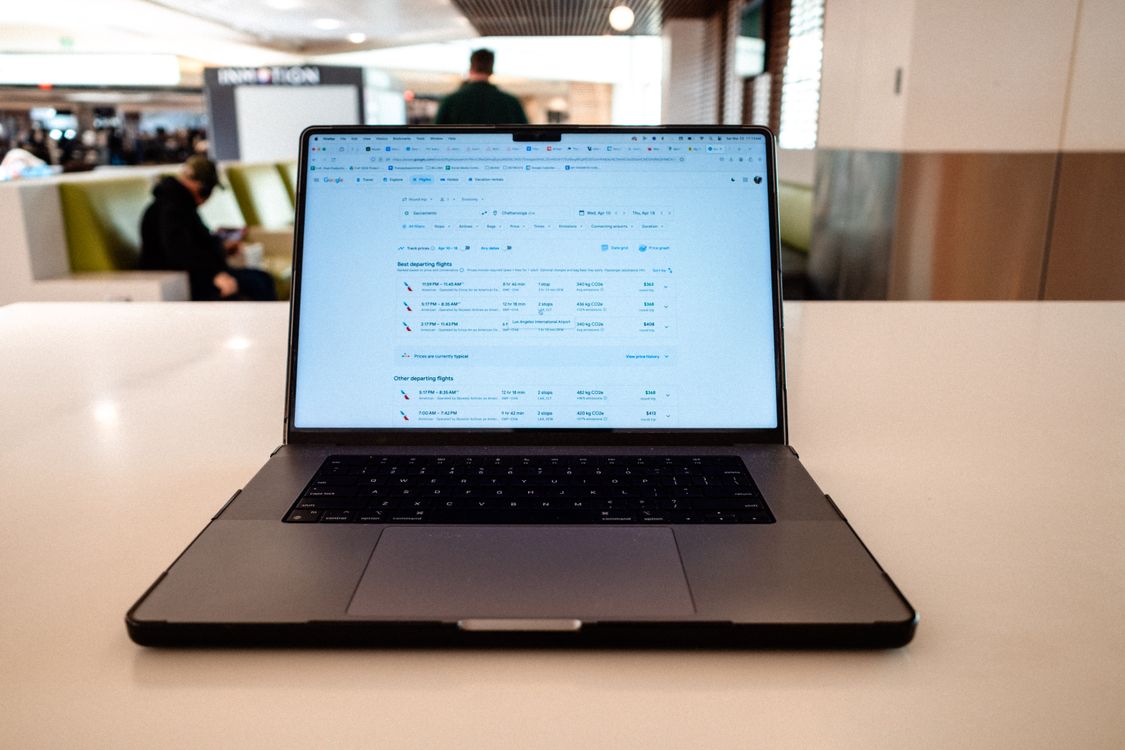
A points balance is a promise, not a trip. Between the number on your rewards dashboard and a seat on an actual plane sit a handful of decisions - which redemption path to take, whether the math favors it, and how to execute the booking without stranding points somewhere they cannot be recovered. None of the individual steps is hard. The order you take them in is what separates a redemption worth two cents per point from one worth half that.
This guide answers two questions that always arrive together. First, how do you actually redeem credit card points for travel - what happens, screen by screen, between balance and boarding pass? Second, how many points does a flight cost - what should you expect to spend, and how do you estimate it before booking? The two halves share one toolkit: a comparison habit and a single formula, both of which appear throughout.
The Three Redemption Paths
Issuer programs such as Chase Ultimate Rewards convert points into travel along two main routes, with a third option sitting in the menu that deserves a warning label. Each path trades convenience against value in a different proportion, and knowing what every one is good at - and what it quietly gives up - is the foundation for the rest of this guide.
Path 1: The Issuer Travel Portal
The portal is the booking site built into your rewards program, and it behaves like a normal travel site: search flights, hotels, car rentals, cruises, tours, or activities, pick an itinerary, and apply points at checkout. Points carry a fixed value here - one Chase Ultimate Rewards point is worth one cent toward travel for most cards - and you can cover the full cost with points or split the payment between points and your card.
Two features make the portal more attractive than its flat rate suggests. Bookings are generally treated as paid fares, so flights booked this way still earn airline miles and elite-qualifying credit. They are also reversible, subject to the portal's cancellation rules - a flexibility the transfer path cannot match.
Path 2: Transfer to an Airline or Hotel Partner
The second path moves points out of the bank program entirely, into an airline or hotel loyalty program where you book an award directly. Value becomes variable instead of fixed: the same point worth a flat cent in the portal often delivers 1.5 to 2.5 cents when transferred for a strong redemption - or less, if the partner prices that route or property poorly.
The trade-offs are real. Transferring requires an award search and a partner loyalty account, the move is final once submitted, and award flights generally earn no miles and no status. This is the path for premium cabins, high-value hotel stays, and sweet-spot awards - bookings where the variable value swings far enough above the portal rate to repay the extra effort.
Path 3: Cash-Outs - Statement Credits, Gift Cards, Merchandise
Statement credits, gift cards, and merchandise round out most redemption menus, and they share one flaw: non-travel options generally return a lower value per point than travel redemptions do. If your card earns travel-oriented points, spending them on travel keeps the value where the program is strongest. Treat cash-outs as the fallback for a balance you genuinely cannot use on a trip - not as a default.
| Factor | Travel Portal | Transfer Partner |
|---|---|---|
| Point value | Fixed (typically ~1¢ per point) | Variable (often 1.5–2.5¢ for strong redemptions) |
| Booking complexity | Low - works like a normal travel site | Higher - requires award search and partner account |
| Reversible | Yes, subject to portal cancellation rules | No - transfers are final once submitted |
| Earn miles or status | Often yes - booking is treated as a paid fare | No - award flights generally do not earn miles or status |
| Best for | Cheap fares, simple bookings, splitting points and cash | Premium cabins, high-value hotel stays, sweet-spot awards |
How Many Points Does a Flight Cost?
Honest answer first: it depends, because most major U.S. airlines no longer publish fixed award charts. They price award seats dynamically, so the same route can cost very different amounts depending on the date and demand. That does not make the question unanswerable. It means the answer comes in two parts - typical ranges to anchor expectations, and a formula that turns any specific cash fare into a points estimate.
Which path you take changes how the question gets answered. In a portal, points apply at a fixed rate, so the points required simply equal the cash price divided by that rate - a calculation you can finish before you ever search. With a transfer, the airline sets the price in its own miles, and because most U.S. carriers use dynamic pricing, that number moves with demand. It can come in lower than the portal for premium cabins and international routes, or higher on peak dates, and you are limited to award availability rather than any seat for sale.
The ranges below give you the lay of the land. A domestic one-way economy award typically costs about 5,000 to 20,000 points, with the shortest routes starting near 5,000 and coast-to-coast flights often running 12,500 or more. One-way economy to Europe commonly starts around 30,000 points on off-peak dates, business class to Europe runs 60,000 and up, and peak premium cabins on long-haul routes can reach 375,000 or beyond.
| Route Type | Approximate Points / Miles | Notes |
|---|---|---|
| Short-haul domestic | 5,000 – 12,500 | Shortest routes can start near 5,000 |
| Standard domestic | 9,500 – 20,000 | Coast-to-coast often around 12,500+ |
| U.S. to Europe (economy) | From ~30,000 | Off-peak dates price lowest |
| U.S. to Europe (business) | 60,000+ | Varies widely by program and route |
| Premium long-haul | 80,000 – 375,000+ | Peak business/first class on long routes |
Treat each figure as a starting point rather than a quote. Because pricing is dynamic, the number on any given search can land above or below these ranges - and it can shift between searches as demand moves.

The Formula That Prices Any Flight
To estimate what a specific flight needs, work backward from the cash fare: points needed = (cash price in dollars × 100) ÷ value per point in cents. Through an issuer portal where points are worth about one cent each, the arithmetic is nearly instant. Some cards lift select flight redemptions to roughly 1.5 to 1.75 cents per point, which cuts the points required by a third or more.
Worked Examples
Start in the portal, where the math is cleanest. A $200 flight at one cent per point requires (200 × 100) ÷ 1 = 20,000 points. If your card boosts flight redemptions to 1.5 cents, the same fare needs (200 × 100) ÷ 1.5 ≈ 13,333. Scale up and nothing changes: a $300 fare runs about 30,000 points at one cent, or roughly 20,000 at 1.5 cents. Before you book anything, you already know how much of your balance the flight will consume.
The formula also runs in reverse to grade an award you have found. Suppose an airline quotes 25,000 miles for a flight selling at $250 cash: ($250 ÷ 25,000) × 100 = 1.0 cent per point - exactly the portal baseline, so transferring earns you nothing extra there. Now suppose a portal wants 50,000 points for a $400 flight while a partner prices the award at 25,000. The portal redemption returns ($400 ÷ 50,000) × 100 = 0.8 cents per point; the partner award returns ($400 ÷ 25,000) × 100 = 1.6 cents. Same flight, double the value.
| Scenario | Calculation | Result |
|---|---|---|
| $200 fare, portal at 1¢ per point | (200 × 100) ÷ 1 | 20,000 points |
| $200 fare, boosted 1.5¢ per point | (200 × 100) ÷ 1.5 | ≈13,333 points |
| $300 fare, portal at 1¢ per point | (300 × 100) ÷ 1 | 30,000 points |
| Award quote: 25,000 miles, $250 fare | (250 ÷ 25,000) × 100 | 1.0¢ per point |
| Portal: 50,000 points, $400 flight | (400 ÷ 50,000) × 100 | 0.8¢ per point |
| Partner: 25,000 points, same $400 flight | (400 ÷ 25,000) × 100 | 1.6¢ per point |
One refinement before trusting the output: subtract taxes and fees from the cash price when judging a transfer award. True value is (cash price minus taxes and fees) ÷ points × 100. An award that looks efficient on points alone can lose its edge - or cost more in total than it first appears - once carrier-imposed surcharges enter the picture.
Booking Through the Portal, Start to Finish
Log into your credit card account through the issuer's website or app. Your rewards balance appears on the account home screen or under a rewards tab. Confirm which program you are looking at - a Chase Ultimate Rewards balance is separate from a cash-back balance on a different card.
From there the process mirrors any online travel agency. Search for the flight, hotel, car rental, cruise, or activity inside the issuer's travel site, select the itinerary, and apply points at checkout - covering the entire cost or splitting it between points and your card. Because the booking functions as paid travel, flights booked this way generally still earn airline miles and elite-qualifying credit, something award tickets generally cannot claim.
One comparison is worth the extra minute: check the portal's fare against what the airline charges directly. Portal fares are not always identical and can run higher. If the portal wants meaningfully more for the same seat, you would be overpaying in points for a flight that is cheaper booked another way.
Transferring to a Partner, Start to Finish
The transfer path has more moving parts, and the sequence is not optional. Performed out of order, these same steps become the most expensive mistake in rewards travel.
Confirm the Award Before Anything Else
Before moving a single point, open the partner program's website or app and search for the exact flight or hotel on your dates. Confirm the award is available and bookable at the price you expect, and note the taxes, fees, or surcharges attached. Dynamic pricing means the only reliable number is the one the airline quotes for that specific seat on those specific dates - not a range, not last month's price. Transfers are irreversible; if the seat or room disappears after you transfer, those miles or points are stranded in the partner program.

Move the Points
You need an active loyalty account with the partner before initiating a transfer. Creating one is free with most airlines and hotels and takes a few minutes, but the name on it must match the name on your credit card account. Inside your rewards portal, navigate to the transfer section, enter the partner account number, select the amount, and confirm. Chase requires transfers in 1,000-point increments at a 1:1 ratio to all 14 of its airline and hotel partners. Most transfers process within minutes, though Chase notes some can take up to seven business days - worth remembering when an award you want is sitting at a good price.
Book With the Partner
Once the points post to your partner account, log into that program and book the award flight or stay. Pay any taxes, fees, or co-pays with your credit card. Then save the confirmation from the partner program - that document, not anything in the credit card portal, is your reservation record.
Deciding Which Path Wins
Every redemption decision reduces to the same side-by-side. Pull up the portal price and the transfer-partner award cost for the identical trip, then calculate cents per point: cash price divided by points required, times 100. A result above 1.5 cents usually justifies a transfer. Below that, the portal's simplicity, reversibility, and mileage earning tilt the scale back the other way.
Trip type predicts the winner more often than not. Transferable points produce their strongest results on premium-cabin international flights and standalone hotel stays where the cash price is high. Economy domestic flights are frequently close to a wash between the portal rate and a partner award - and when the award costs equal or more points than the portal, or no award seat exists at all, the portal wins without further analysis.
Flexibility acts as a multiplier. Award pricing follows demand, so shifting a trip by a few days can lower the points required, sometimes substantially - an effect most pronounced on international and premium-cabin awards. When your dates can bend, search the off-peak options before accepting any number as final.
Knowing your program's point value in advance speeds every one of these calls. If a flight needs 25,000 points against a $250 cash price, you can see at a glance that the redemption pays one cent per point - and decide immediately whether that clears your personal bar for spending points instead of cash.
Two structural habits round out the strategy. First, hold points in your issuer's program until a specific booking is ready - Chase Ultimate Rewards points stay eligible to move to any of the program's partners at any time, while transferred points are locked into one partner and subject to its rules and expiration policies. Second, combine cards within the same program family where you can. Programs like Ultimate Rewards let you pool points across multiple cards on the same account, so pairing a higher-earning card with one that carries transfer access maximizes both the earning side and the redemption side.

Where Redemptions Go Wrong
Transferring before confirming availability sits at the top of the list, because it is both the most common error and the most expensive. Once points leave your bank program they cannot come back. An award that vanishes between your search and your transfer leaves those points committed to a program you may have no other use for.
Trusting an outdated award chart is the quieter cousin of the same mistake. Older "this route costs X miles" figures are no longer dependable now that most major U.S. airlines price dynamically, and the cost can even move between searches as demand and cash fares shift. Confirm the current price for your specific dates, every single time.
Ignoring the cash component distorts decisions from the other side. A redemption that looks efficient on points alone can lose its advantage once carrier-imposed fees are added, so factor the full cash outlay - points plus taxes plus surcharges - into every comparison.
Finally, watch both ends of the patience spectrum. Redeeming at a poor rate out of convenience, when the value works out to well under one cent per point, usually means cash was the better way to pay. But hoarding points for a perfect future redemption carries its own cost: programs can devalue awards with limited notice, so a strong redemption available today typically beats a theoretical one that never materializes.

Frequently Asked Questions
No. Once points move from your credit card program to an airline or hotel loyalty program, the transfer is final. That one-way door is the reason availability gets confirmed before the transfer, never after - stranded points cannot be returned to the bank program, no matter how the award search turns out.
Yes, and it must be in your name - the partner account holder has to match the name on your credit card account. Setting one up is free with most airlines and hotels and takes a few minutes, so treat it as a formality to complete before transfer day rather than an obstacle.
Through most issuer travel portals, yes - apply points to part of the booking and put the remainder on your card. Partner awards work differently. The award price generally must be covered in points entirely, with taxes and fees paid separately in cash, so partial-points bookings are effectively a portal-only feature.
Dynamic pricing. When an airline ties award prices to demand and cash fares, the points a seat costs can move between searches as availability shifts. A favorable award price carries no guarantee of sticking around - one more argument for booking strong redemptions when you find them rather than waiting.
Strip away the partner lists and transfer menus and the whole discipline fits in a sentence: find the cash price, run the cents-per-point math, confirm the award before any points move, and take good value when it appears instead of holding out for perfect. The portal handles the simple trips; transfers handle the spectacular ones. Either way, the question of how many points a flight costs stops being a mystery and becomes a thirty-second calculation you run before every booking.